The Wound That Never Heals: Silence Always Speaks for Power
The Wound That Never Heals: Silence Always Speaks for Power
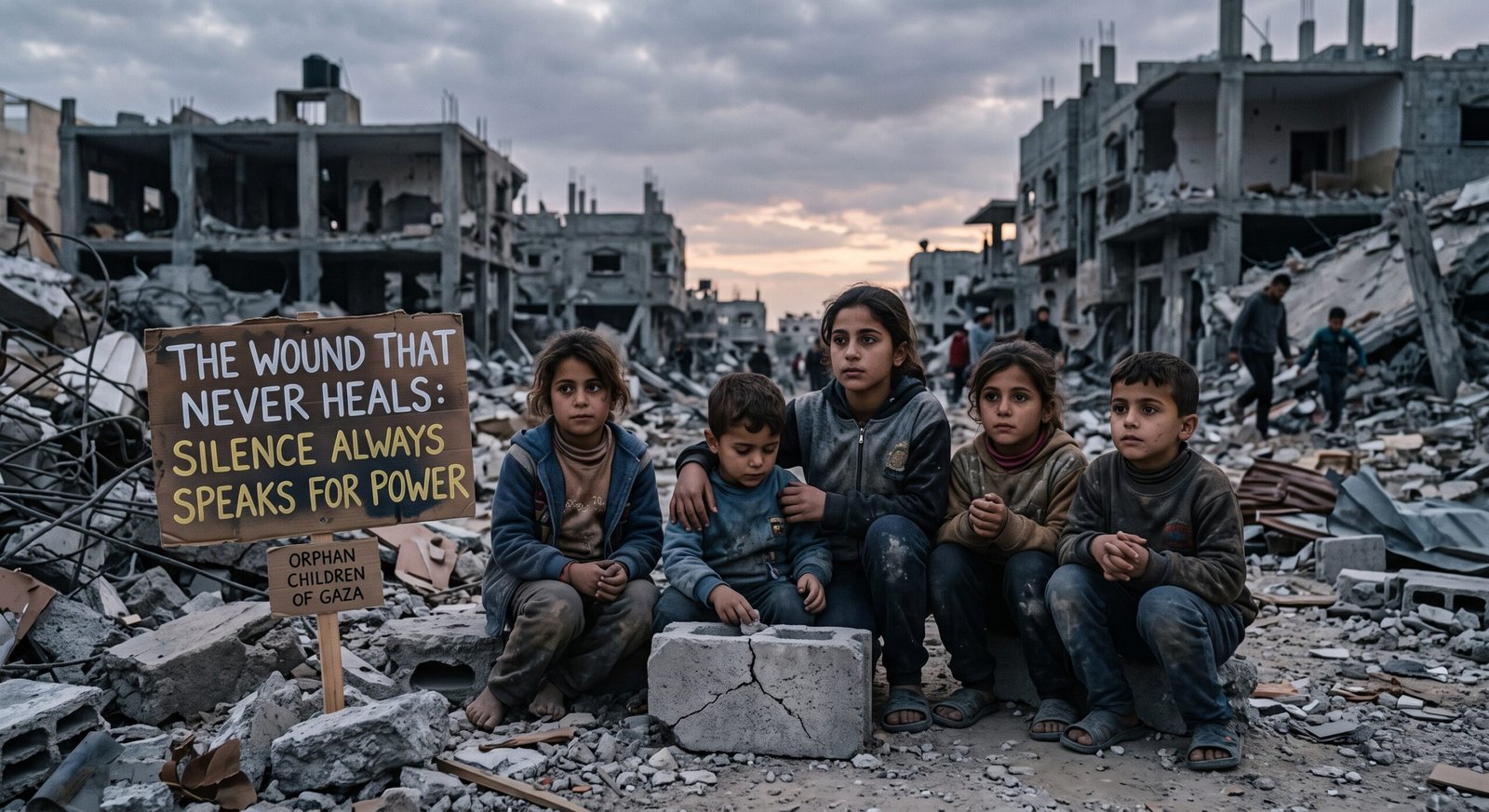
In Gaza today, parents count their children at night. Not out of tenderness, but in preparation for the grief that may come with dawn. Children are pulled from beneath the rubble. Hospitals have no medicine. And the world issues statements, then quietly returns to its arms deals—as if those cries of anguish were merely a temporary inconvenience.
Gaza is not an exception. Gaza is a mirror.
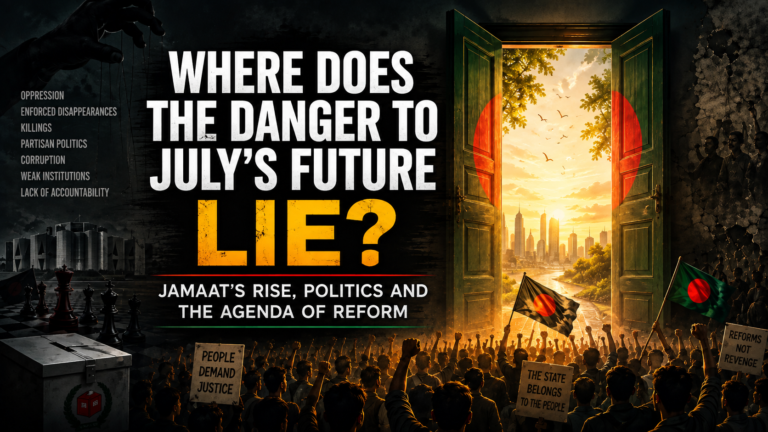
In Bangladesh too, there was a time when young people took to the streets. They carried no weapons. They carried only anger against discrimination. The answer they received was gunfire. Lives were lost on pavements that should have belonged to them. The autocrat eventually left. But autocracy is never just one person.
A ruler may leave, but the system remains.
In Bangladesh, the judiciary still stands beneath the shadow of executive power. The referendum has delivered its verdict. The will of the people is clear. Yet those who have benefited from the system for decades have merely rearranged the furniture and called it constitutional continuity.
Loan defaulters still receive electoral nominations. Corrupt corporations and privileged groups loot the country’s banks, while ordinary people lose their savings and face ruin. The looters briefly disappear behind the curtain, searching for a weak leadership. In time, they find one. Then they wait—until public anger fades and the celebration in the streets grows tired—before returning to their old dens.
They know how to wait. They know how to install weak leadership in power. And once the excitement is over, everyone goes back to sleep, and the old dealings begin again. Everything returns to the old ways. Anger disappears. Debt and ownership do not.
In Cairo, more than sixty thousand political prisoners are languishing in jail. A man who challenged Sisi in a presidential election was imprisoned. Those who stood in the streets in support of Palestine have been arrested. Two teenagers who merely wrote “Free Gaza” on a wall are now being held in adult prisons.
This regime survives through the financial support of Western and Gulf states—countries that sustain a decaying system because they fear what might happen if it collapses.
And then there is Sudan.
More than 150,000 people have reportedly been killed. Over 30 million people need humanitarian assistance. Mass graves are now visible from space. Two military forces—the SAF and the RSF—are fighting for power. Weapons flow in from outside while gold flows out. Ordinary people are crushed between them.
A former UN humanitarian chief has said that there is one crucial difference between Gaza and Sudan: the international community is largely indifferent to Sudan. The media remains silent. Gaza receives coverage because the other side is deeply embedded in the strategic and corporate interests of the West.
This is the thread that connects Gaza to Dhaka, Dhaka to Cairo, Cairo to Khartoum, Khartoum to Nairobi and Caracas—and all of them to those capitals that lecture the world about democracy.
A corporate grid now rises everywhere, casting its shadow over human dreams, labour and freedom.
This grid—or this greed—is not one company. It is not one government either. It is the network of banks, courts, media institutions, development projects and international interests through which human beings are gradually reduced from citizens into consumers, workers and statistics.
It never announces itself. That is its greatest cunning.
It speaks of development. It speaks of investment. It speaks of growth.
And behind those words, fishermen lose their rivers. Farmers lose their land. Students lose the future they were promised when they were told to study, work hard and build a life.
The tragedy is not only what is being destroyed.
The deeper wound lies in what is never allowed to be built.
A justice system that a poor person can trust.
An economy that distributes dignity along with wealth.
A state where garment workers, farmers and students do not have to spill blood simply to defend their right to survive.
At times, it feels as though none of this will ever end.
But perhaps that is exactly what power wants.
Despair is one of the most effective instruments of control. More reliable than any army. More durable than any wall. Because the person who believes that nothing will ever change eventually stops taking to the streets.
And yet people still rise.
In Gaza.
In Dhaka.
In Cairo.
In Khartoum.
In every corner of the world.
They rise. They are suppressed. And then they rise again.
Because the alternative—silence—is a kind of death that arrives long before the body itself stops breathing.
And silence is never neutrality. Silence always speaks for power.